Key Takeaways
- We compared creator video for the same 84 brands on TikTok and Instagram: 1,402 videos in total.
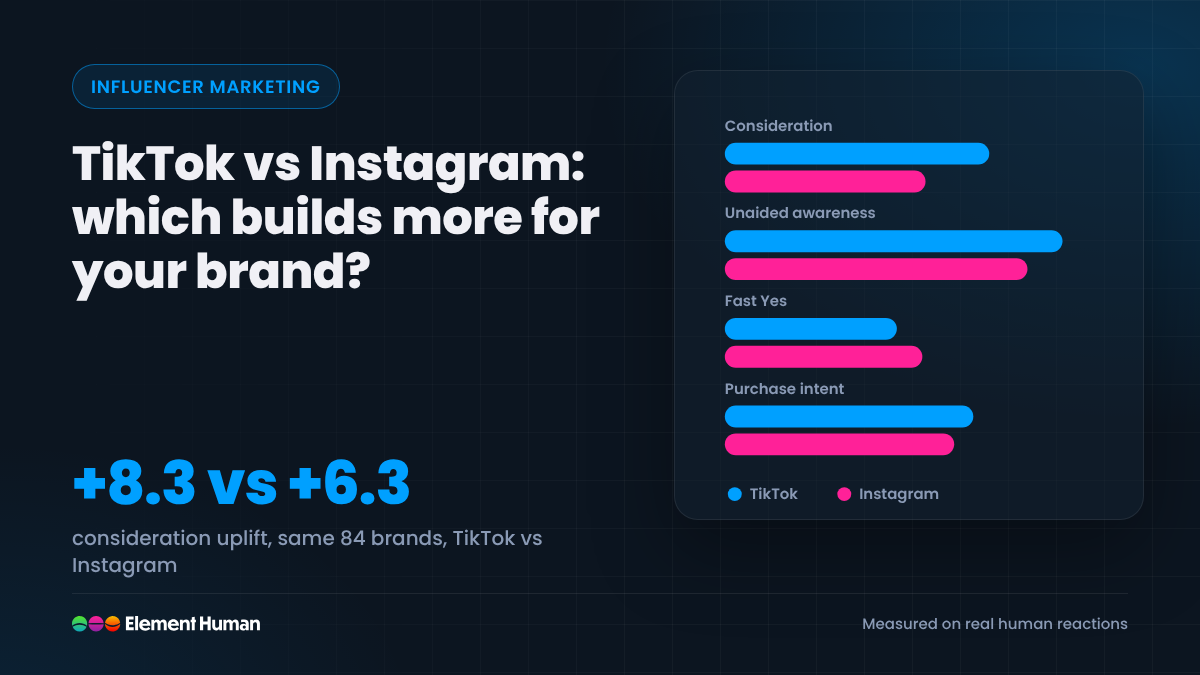
- TikTok drives more consideration: +8.3 points against +6.3 on Instagram.
- TikTok also drives more unaided awareness: +10.6 points against +9.5.
- Instagram builds more brand memory: +6.2 points on the Fast Yes, against +5.4 on TikTok.
- Purchase intent is about level (+7.8 vs +7.2 points), and raw attention seconds can't be compared across platforms.
"TikTok or Instagram?" is one of the first questions in any creator plan. The usual way to answer it is attention: which platform holds people longer. But attention numbers from different platforms aren't measured on the same terms, and attention isn't the outcome you're paying for anyway.
So we compared what matters for the brand. We took the 84 brands we've tested with creator video on both TikTok and Instagram, and looked at how much each platform moved consideration, awareness, brand memory and purchase intent against a control group.
Which platform builds more for the brand?
Neither wins everything. Each platform is better at a different job.
- ConsiderationTikTok ahead
- Unaided awarenessTikTok ahead
- Brand memory (Fast Yes)Instagram ahead
- Purchase intentAbout level
Consideration: TikTok +8.3, Instagram +6.3. Unaided awareness: TikTok +10.6, Instagram +9.5. Brand memory (Fast Yes): TikTok +5.4, Instagram +6.2. Purchase intent: TikTok +7.8, Instagram +7.2. Source: Element Human, 715 TikTok and 687 Instagram creator videos from 84 brands tested on both.
Is TikTok better for awareness and consideration?
Yes. For the same brands, TikTok creator video drives more consideration (+8.3 points against +6.3 on Instagram) and more unaided awareness (+10.6 against +9.5).
The consideration gap is the clearest difference in the data. If your goal is to get more people thinking about your brand and adding it to their shortlist, TikTok has the edge.
Is Instagram better for brand memory?
Yes. Instagram creator video builds more brand memory, measured with our timed implicit association test (the "Fast Yes"): +6.2 points against +5.4 on TikTok.
Brand memory is how firmly people link your brand to the traits you want. It's the slow-building asset that makes future advertising work harder, so Instagram earns its place in a plan even where TikTok wins on reach.
Which platform drives more purchase intent?
About level. TikTok averages +7.8 points and Instagram +7.2, a gap small enough to sit within the margin of error. On wanting to buy, both can deliver.
Can you compare attention across TikTok and Instagram?
Not directly. TikTok and Instagram have different rules of engagement, and attention tests on each platform aren't set up identically. In our simulated feeds, for example, the TikTok session runs longer than the Instagram one, so raw seconds of attention will naturally come out higher on TikTok.
That's why we rank attention against each platform's own benchmark (our Stopping Power percentile) rather than comparing seconds across platforms. Any metric built on raw attention seconds, such as "seconds of attention per buyer", carries that difference with it. For a fair platform comparison, compare outcomes: uplift in awareness, consideration, memory and intent per video, for the same brands.
How to split creator budget between TikTok and Instagram
- Start with the job. Awareness and consideration: lean TikTok. Long-term brand memory: make sure Instagram is in the mix.
- Compare outcomes, not attention seconds. Use uplift against a control group, not time spent, to judge platforms against each other.
- Benchmark attention within each platform. Judge a TikTok video against TikTok norms and an Instagram video against Instagram norms.
- Test your own brand on both. These are averages across 84 brands. Your category and creators can move the result.
How we measured this
For this analysis we used 1,402 creator videos (715 on TikTok, 687 on Instagram) from the 84 brands Element Human has tested with creator video on both platforms, in our simulated TikTok and Instagram feeds. Each figure is the average uplift for exposed viewers against a control group who did not see the content, with around 150 exposed and 100 control viewers per test. Brand memory is measured with a timed implicit association test; awareness, consideration and purchase intent by survey. Data as of November 2026. Element Human also tests brand ads as well as creator content, across social feeds (TikTok, Instagram, Facebook and YouTube Shorts), CTV pre-rolls and sponsorships in simulated Netflix and Prime Video environments, and standalone video such as TV ads. Every test compares an exposed group with a control group of people who did not see the content.
About the author
Hamish McPharlin is Chief Customer Officer at Element Human, where he helps brands prove and optimise the impact of their advertising. He previously worked at the BBC and CNN. Follow Hamish on LinkedIn.
Want to gather your own insights?
Ellie is Element Human's AI connector. Ask it about attention, emotion and brand memory, and get answers from real human reaction data.
Try Ellie