Key Takeaways
- Fashion creator videos hold the least attention of any major category on both TikTok and Instagram.
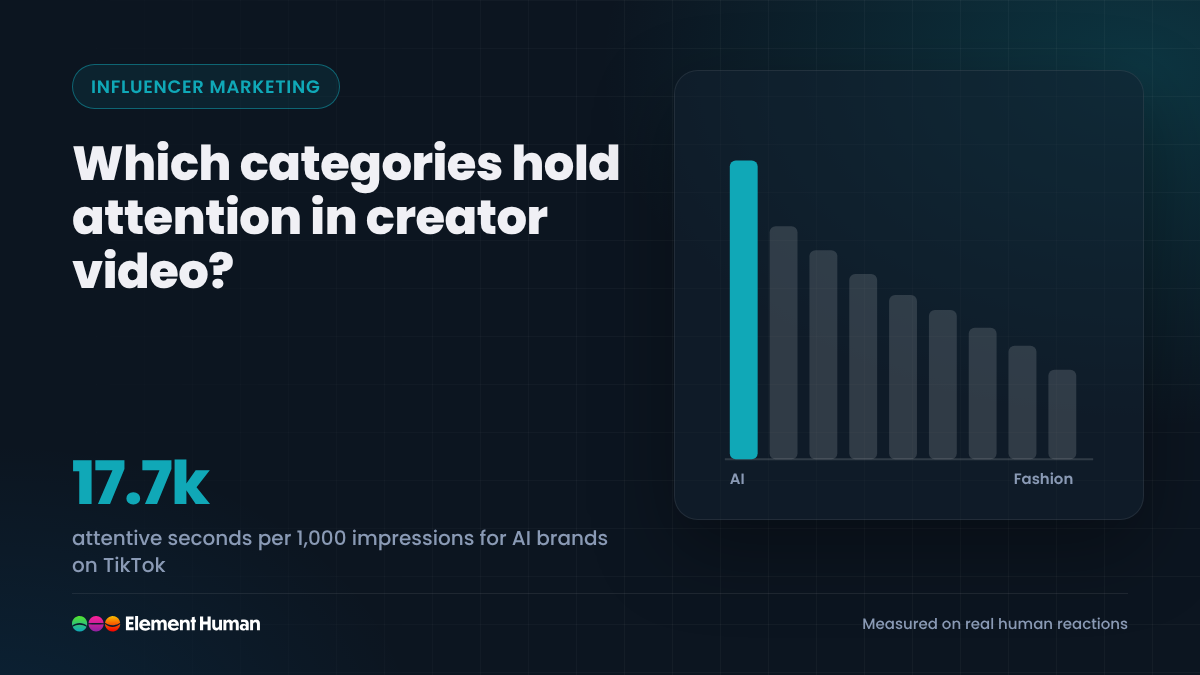
- AI brands lead on TikTok, averaging 17.7k attentive seconds per thousand impressions.
- On Instagram, insurance, telecoms and tech lead, each averaging over 11k.
- Entertainment is in the top four on TikTok but in the bottom two on Instagram.
- Compare categories within a platform, not raw attention across platforms. Platform benchmarks alone aren't enough.
Most creator budgets are planned on platform benchmarks: average attention on TikTok, average attention on Instagram. But your category can sit far above or far below that average, and the ranking can flip between platforms.
We measured attention to creator video across TikTok and Instagram, category by category. Here is what stood out.
Which categories hold the most attention on TikTok?
AI brands are crushing it on TikTok, averaging 17.7k attentive seconds per thousand impressions, more than any other category. Entertainment brands are also in the top four.
- 17.7kattentive seconds per 1,000 impressions: AI brands on TikTok, the top category
- 11k+attentive seconds per 1,000 impressions: insurance, telecoms and tech on Instagram, the top three
- LastFashion holds the least attention of any major category on both platforms
TikTok and Instagram test sessions run for different lengths, so compare categories within a platform, not the two platforms with each other.
Which categories hold the most attention on Instagram?
On Instagram it's insurance, telecoms and tech, each averaging over 11k attentive seconds per thousand impressions. These are categories people don't usually expect to win on social, which may be exactly why their creator content gets noticed.
Why are fashion brands last on attention?
Fashion comes last of the major categories on both platforms.
Fashion is one of the most crowded categories in creator content. When every scroll is full of hauls, try-ons and styling videos, one more outfit video struggles to hold anyone. That doesn't mean fashion creator content can't work, but it has to work harder to stand out. Our data on creator video length and what drives fashion consideration shows where to start.
Why does entertainment do so differently on each platform?
Entertainment brands are in the top four on TikTok but in the bottom two on Instagram. The same category, with very different results depending on where the content runs.
That's the clearest sign that a single platform benchmark can mislead. Plan for your category on each platform, not for the platform average.
Can you compare these attention numbers between TikTok and Instagram?
No. Compare categories within a platform, not raw attention across platforms. TikTok and Instagram have different rules of engagement, and our attention tests aren't set up identically on each (the TikTok feed session runs longer), so TikTok numbers come out higher by design. That's why we rank attention against each platform's own benchmark. To compare platforms fairly, look at brand outcomes instead: here's how TikTok and Instagram compare for the same brands.
How to use category attention in your planning
- Find your category on each platform. Benchmark against your category on that platform, not the platform average.
- Back the platform where your category holds attention. Entertainment brands, for example, look much stronger on TikTok.
- If your category is crowded, brief for difference. Fashion brands need creator content that doesn't look like everything else in the feed.
- Don't stop at attention. Attention is the first job. Check whether it turns into consideration and purchase intent and brand memory too.
How we measured this
For this analysis we used creator videos tested in our simulated TikTok and Instagram feeds, where each video appears at a random position among other posts. Attention is in-feed dwell time, expressed as attentive seconds per 1,000 impressions (average seconds per impression multiplied by 1,000), and categories are compared within each platform. Element Human also tests brand ads as well as creator content, across social feeds (TikTok, Instagram, Facebook and YouTube Shorts), CTV pre-rolls and sponsorships in simulated Netflix and Prime Video environments, and standalone video such as TV ads. Every test compares an exposed group with a control group of people who did not see the content.
About the author
Hamish McPharlin is Chief Customer Officer at Element Human, where he helps brands prove and optimise the impact of their advertising. He previously worked at the BBC and CNN. Follow Hamish on LinkedIn.
Want to gather your own insights?
Ellie is Element Human's AI connector. Ask it about attention, emotion and brand memory, and get answers from real human reaction data.
Try Ellie