Key Takeaways
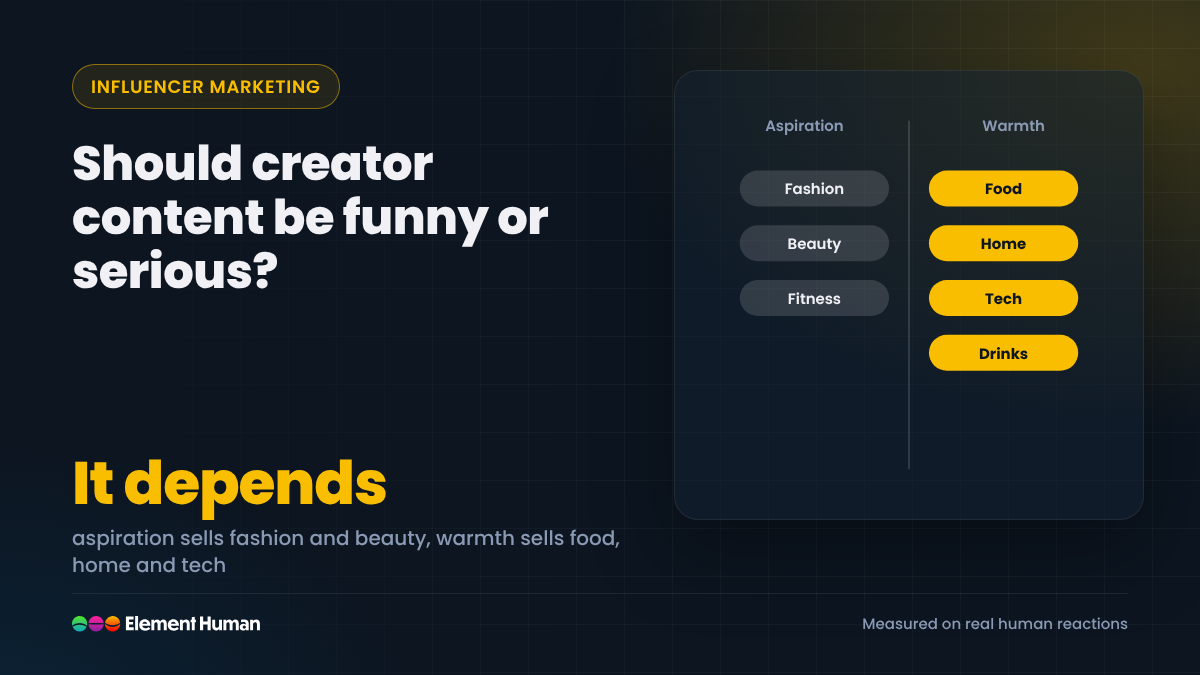
- There is no single right tone for creator content. It depends on the category.
- Aspiration sells in health and fitness, fashion and beauty: a cooler, more serious tone builds stronger brand memory and trust.
- Warmth sells in home and garden, electronics and tech, alcohol and spirits, and food and beverage: getting people smiling is what makes the brand stick.
- In travel, software and retail, the mood matters less than the message.
- Based on 1,357 creator videos from 118 brands on TikTok and Instagram, viewed by over 150,000 people.
Ask most marketers how to make creator content work and you'll hear "make it entertaining". Funny travels. Smiles get shares. So the default brief often leans towards humour.
Our data says the right tone depends on what you're selling. In some categories a laugh is exactly what makes the brand stick. In others it gets in the way.
How do we measure the tone of creator content?
We measure how audiences feel while they watch, and what sticks with them afterwards. Facial coding tracks emotional expression, such as smiling, second by second while people watch the video. Implicit association testing then shows which traits people link to the brand afterwards, and how firmly. Put the two together and you can see which emotional tone builds brand memory in each category.
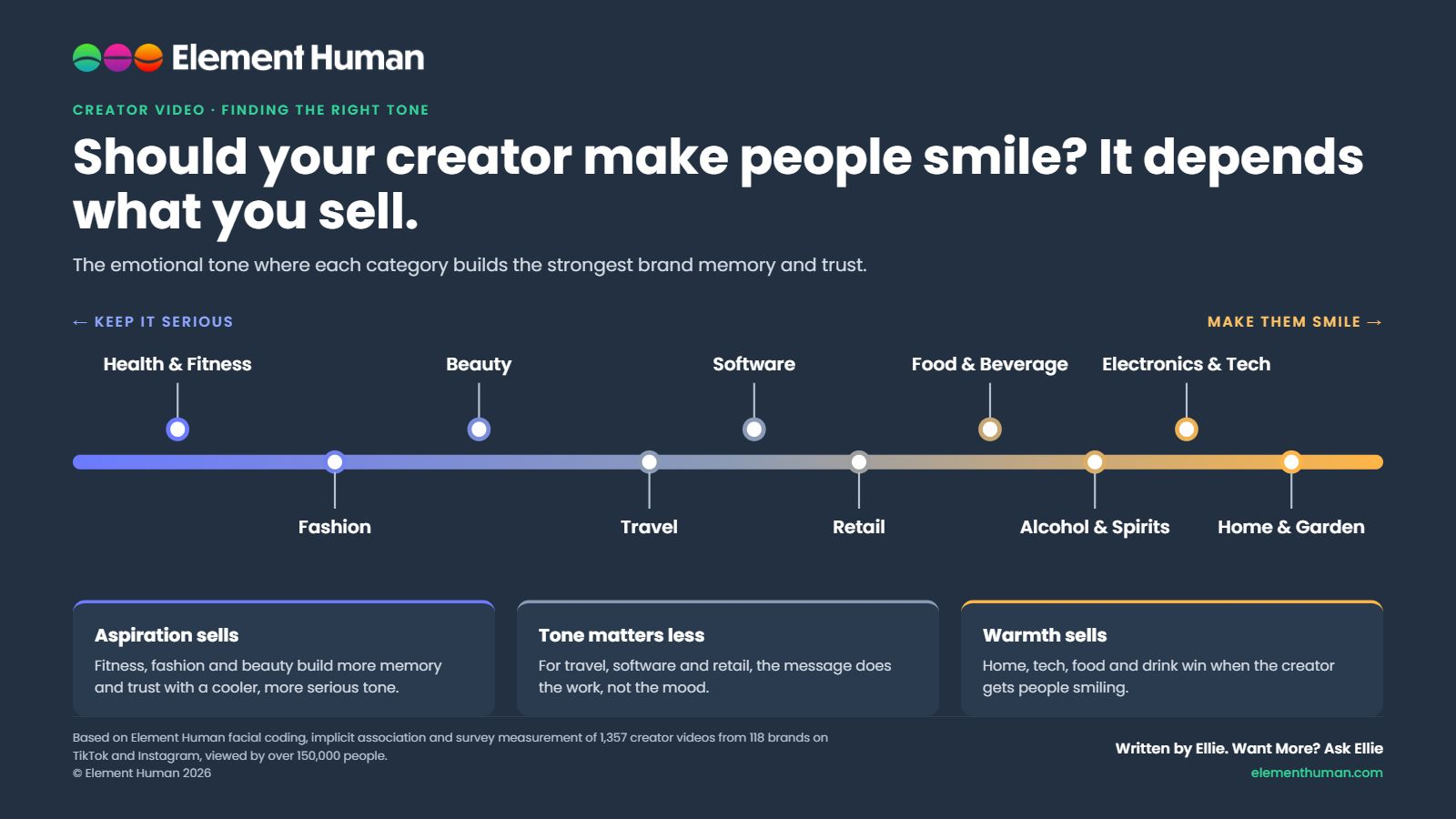
- AspirationCooler, more serious tone
- Health & fitness
- Fashion
- Beauty
- WarmthGet people smiling
- Home & garden
- Electronics & tech
- Alcohol & spirits
- Food & beverage
Source: Element Human, 1,357 creator videos from 118 brands on TikTok and Instagram.
When does a serious tone work best?
Aspiration sells in fitness, fashion and beauty. In these categories, a cooler, more serious tone builds stronger brand memory and trust.
These are categories where people are buying into a version of themselves: fitter, sharper, more put together. Content that plays it cool keeps that aspiration intact. Too much comedy can undercut it.
When should creator content make people smile?
Warmth sells for home and garden, electronics and tech, alcohol and spirits, and food and beverage. Here, getting people smiling is what makes the brand stick.
These are everyday categories that live in people's homes and routines. A warm, funny moment makes the brand feel familiar and likeable, and that feeling carries into memory.
Does tone matter in every category?
No. For travel, software and retail, the mood matters less than the message. In these categories, what the creator says and shows about the product does more of the work than whether people smile.
That's a useful finding in itself. It means you can brief these creators on the story first and let the tone follow.
How to set the tone in your next creator brief
- Start with your category. Decide whether your brand sits with aspiration, warmth or message-led.
- Brief the feeling, not just the script. Tell creators whether you want people smiling or aspiring.
- Put the brand inside the emotional moment. The laugh or the aspiration should land with the brand on screen, not before it.
- Test it. Measure emotional response and brand memory together, so you know whether the feeling is building the brand.
So before you brief your next creator, ask: should my audience be smiling, or aspiring?
How we measured this
For this analysis we used 1,357 creator videos from 118 brands, tested in our simulated TikTok and Instagram feeds and viewed by over 150,000 people. Emotional response was measured with webcam-based facial coding (second by second, including happiness), brand memory with implicit association testing, and trust by survey, each against a control group. Element Human also tests brand ads as well as creator content, across social feeds (TikTok, Instagram, Facebook and YouTube Shorts), CTV pre-rolls and sponsorships in simulated Netflix and Prime Video environments, and standalone video such as TV ads. Every test compares an exposed group with a control group of people who did not see the content.
About the author
Hamish McPharlin is Chief Customer Officer at Element Human, where he helps brands prove and optimise the impact of their advertising. He previously worked at the BBC and CNN. Follow Hamish on LinkedIn.
Want to gather your own insights?
Ellie is Element Human's AI connector. Ask it about attention, emotion and brand memory, and get answers from real human reaction data.
Try Ellie