DIY vs. Outsourced vs. Hybrid Research: A Strategic Decision Tree
In today's data-driven business environment, market research has become an essential component of strategic decision-making. However, organizations face a fundamental choice that significantly impacts both the process and outcomes of their research initiatives: should they conduct research in-house (DIY) or partner with specialized external providers? This article presents a comprehensive decision framework to help brands and agencies navigate this critical choice in 2025's complex research landscape.
Key Takeaways
- Modern behavioral measurement delivers speed, affordability, and quality — breaking the traditional research triangle trade-off
- Element Human measures second-by-second emotion, attention, and memory to reveal what truly drives audience behavior
- Behavioral data provides a more complete picture of content effectiveness than self-reported survey responses
- Understanding audience emotion before investing in media placement saves budget and improves campaign ROI
- Second-by-second measurement reveals exactly when and why audiences engage or disengage with content
The Evolving DIY vs. Outsourced Research Landscape
The market research industry has undergone a profound transformation in recent years, fundamentally changing the dynamics of the DIY vs. outsourced decision. Understanding these shifts is essential for making informed choices about research execution.
Historical Context: From Provider Dominance to Democratized Access
The research landscape has evolved dramatically over the past several decades. This evolution has fundamentally changed the decision calculus from "Can we do this ourselves?" to "Should we do this ourselves?" as technical barriers have diminished while strategic considerations have become more nuanced.
Traditional Era (Pre-2000)
Research was predominantly outsourced to specialized agencies due to their exclusive access to respondents, methodological expertise, and analytical capabilities. In-house research was limited to the largest organizations with dedicated departments.
Related reading: Will AI Replace Market Research? · Market Research Use Cases by Industry
Digital Transition (2000-2015)
Online methodologies created new possibilities for in-house research, but sophisticated tools remained primarily in the hands of specialized providers. Organizations began developing hybrid models with some capabilities in-house.
Platform Era (2015-2020)
The emergence of self-service research platforms dramatically democratized access to research tools and respondents. Organizations of all sizes began building internal capabilities, while providers shifted toward value-added services beyond basic execution.
AI-Enhanced Era (2020-Present)
Artificial intelligence has further transformed the landscape, automating many aspects of research design, execution, and analysis. This has simultaneously empowered DIY approaches while creating new forms of specialized expertise among providers.
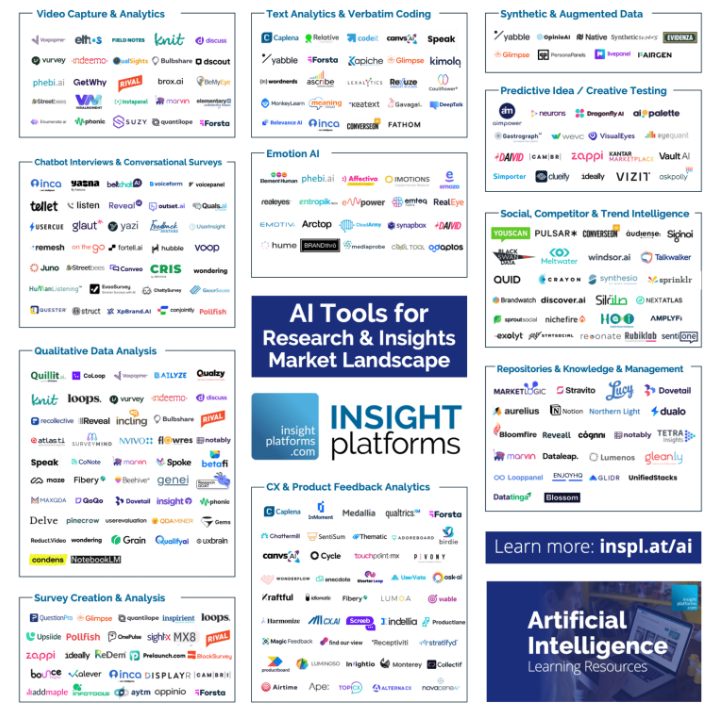
The Current State of DIY Research Capabilities
Today's DIY research landscape offers unprecedented capabilities. These advancements have made DIY research a viable option for many organizations and research objectives that previously required specialized external support.
- Sophisticated Platforms: Tools like Qualtrics, SurveyMonkey Enterprise, and Attest provide enterprise-grade research capabilities with intuitive interfaces and extensive functionality.
- Democratized Sample Access: Programmatic sample platforms like Lucid Marketplace and Cint enable direct access to millions of respondents without agency intermediaries.
- Automated Analysis: AI-powered analytics tools automatically generate insights from data, reducing the expertise required for basic analysis.
- Template Libraries: Extensive libraries of pre-validated questions, survey designs, and report templates simplify the research process.
- Knowledge Resources: Abundant educational resources, communities, and training programs support skill development for in-house teams.
The Transformed Value Proposition of Research Providers
As DIY capabilities have expanded, research providers have evolved their value proposition. This evolution has created a more nuanced value equation, with providers focusing on areas where they can deliver value beyond what DIY approaches can achieve.
- Strategic Consultation: Shifting from execution to advisory roles, helping organizations design research programs aligned with business objectives.
- Methodological Innovation: Developing specialized approaches beyond the capabilities of standard DIY platforms.
- Advanced Analytics: Offering sophisticated analytical techniques that extract deeper insights from research data.
- Industry Expertise: Providing contextual understanding and benchmarking based on category-specific experience.
- Integrated Insights: Connecting new research with existing knowledge and multiple data sources for comprehensive understanding.
- Quality Assurance: Ensuring methodological rigor and data reliability through specialized validation techniques.
The Emergence of Hybrid Models
Perhaps the most significant trend is the growth of hybrid approaches that combine elements of both DIY and outsourced models. These hybrid approaches recognize that the DIY vs. outsourced decision is not binary but exists on a spectrum with multiple potential configurations.
- Supported DIY: Organizations use internal platforms and resources but engage external experts for guidance at critical junctures.
- Managed Services: Providers offer platform access combined with varying levels of professional support, creating flexible service models.
- Capability Partnerships: Organizations develop long-term relationships with providers who complement their internal capabilities.
- Center of Excellence Models: Centralized internal teams provide research expertise to the broader organization while leveraging external partners for specialized needs.
- Technology-Enabled Collaboration: Shared platforms enable seamless collaboration between internal teams and external partners throughout the research process.
The Strategic Decision Framework
Making optimal choices about research execution requires a structured approach that considers multiple dimensions beyond simple cost comparison. This decision framework provides a comprehensive methodology for evaluating when to leverage internal capabilities versus external expertise.
Primary Decision Factors
Six primary factors should drive the DIY vs. outsourced decision. These factors should be evaluated systematically rather than allowing a single dimension (typically cost) to dominate the decision process.
1. Strategic Importance
How critical is this research to major business decisions? What are the consequences of suboptimal research execution? How visible will the results be to senior leadership?
2. Methodological Complexity
How sophisticated is the required research design? Does the approach require specialized expertise beyond standard methodologies? Are there complex analytical requirements?
3. Internal Capability
What research expertise exists within the organization? Does the team have experience with similar research initiatives? Are internal resources familiar with relevant methodologies?
4. Resource Availability
Do internal teams have bandwidth for proper execution? Are there competing priorities that might compromise quality? Is there executive support for allocating resources to this initiative?
5. Timeline Requirements
How quickly must the research be completed? Is there flexibility in the delivery schedule? Are there fixed deadlines driving the timeline?
6. Budget Considerations
What budget is available for this research initiative? How does the cost-benefit equation differ between approaches? Are there long-term investment implications beyond this specific project?

The Decision Tree Methodology
The decision tree provides a structured approach to navigating the DIY vs. outsourced choice.
Step 1: Assess Strategic Importance
- High strategic importance (major business decisions, significant investment guidance, core strategy development) typically warrants greater consideration of outsourced or hybrid approaches to ensure optimal execution.
- Moderate strategic importance allows for more flexibility based on other factors.
- Low strategic importance (routine tracking, minor tactical decisions) may be well-suited to efficient DIY approaches.
Step 2: Evaluate Methodological Complexity
- High complexity (advanced statistical techniques, specialized methodologies, multi-phase designs) often requires external expertise unless matched by exceptional internal capabilities.
- Moderate complexity can be addressed through either approach depending on internal capabilities.
- Low complexity (standard survey designs, basic analysis) is typically well-suited to DIY approaches with appropriate tools.
Step 3: Inventory Internal Capabilities
- Strong internal capabilities may enable DIY approaches even for relatively complex research.
- Moderate internal capabilities might suggest hybrid approaches that leverage both internal and external expertise.
- Limited internal capabilities typically indicate a need for significant external support, particularly for important or complex research.
Step 4: Evaluate Resource Availability
- High resource availability supports DIY approaches that require internal time investment.
- Constrained resources may necessitate outsourcing regardless of capability levels.
- Variable resource availability might suggest flexible hybrid approaches.
Step 5: Consider Timeline Requirements
- Extremely tight timelines may require external support to meet deadlines.
- Moderate timelines allow for consideration of either approach based on other factors.
- Flexible timelines provide the opportunity to build internal capabilities through DIY approaches.
Step 6: Incorporate Budget Realities
- Limited budgets may necessitate DIY approaches despite other considerations.
- Moderate budgets allow for hybrid approaches that strategically leverage external expertise.
- Substantial budgets provide the flexibility to optimize based on non-financial factors.
This sequential evaluation process guides organizations toward the most appropriate approach based on their specific situation rather than defaulting to either DIY or outsourced models.
Decision Pathways and Recommended Approaches
The decision tree creates several common pathways that lead to different recommended approaches. These various pathways illustrate how different combinations of decision factors lead to distinct recommended approaches rather than a one-size-fits-all solution.
Full Outsourcing Pathway
High strategic importance, high methodological complexity, limited internal capability, constrained internal resources, tight timeline requirements, adequate budget. This pathway leads to comprehensive outsourcing to specialized research partners who can provide end-to-end execution with appropriate expertise and dedicated resources.
Full DIY Pathway
Lower strategic importance, standard methodological requirements, strong internal capabilities, available internal resources, flexible timeline, limited budget. This pathway supports complete in-house execution leveraging internal expertise and self-service platforms for efficient research delivery.
Strategic Guidance Pathway
High strategic importance, moderate methodological complexity, moderate internal capabilities, limited internal resources, moderate timeline flexibility, moderate budget. This pathway suggests a hybrid approach where external partners provide strategic guidance and quality assurance while internal teams handle execution using appropriate platforms.
Execution Support Pathway
Moderate strategic importance, moderate to high methodological complexity, strong strategic capabilities but limited execution experience, moderate resource availability, moderate timeline, moderate budget. This pathway indicates a hybrid model where internal teams lead strategy and analysis while external partners support execution and data collection.
Capability Building Pathway
Moderate strategic importance, moderate methodological complexity, developing internal capabilities, available internal resources, flexible timeline, investment-oriented budget. This pathway supports a supported DIY approach where external partners provide training and oversight while internal teams build capabilities through hands-on execution.
DIY Research: When to Bring It In-House
Certain research scenarios are particularly well-suited to DIY approaches, offering advantages in efficiency, control, and organizational learning.
Ideal Use Cases for DIY Research
Several types of research initiatives align particularly well with in-house execution. These use cases typically involve standard methodologies, reasonable sample sizes, and straightforward analysis that align well with the capabilities of modern DIY platforms.
- Ongoing Tracking Studies: Regular measurement of key metrics with consistent methodology benefits from the efficiency and control of in-house execution.
- Iterative Product Testing: Rapid cycles of concept or usability testing are often more efficiently managed through internal platforms that enable quick deployment and analysis.
- Customer Satisfaction Measurement: Systematic collection of feedback from existing customers can be effectively managed through internal systems integrated with customer databases.
- Basic Market Sizing: Straightforward assessment of market potential using standard methodologies can often be efficiently executed in-house.
- Tactical Decision Support: Research informing lower-stakes operational decisions benefits from the speed and cost-efficiency of DIY approaches.
- Internal Stakeholder Research: Gathering feedback from employees or internal stakeholders is typically well-suited to in-house execution.
Key Success Factors for DIY Research
Organizations that excel at DIY research typically demonstrate several critical success factors. Organizations that invest in these success factors typically achieve significantly better results from their DIY research initiatives than those that approach in-house research as merely a cost-saving measure.
- Executive Sponsorship: Strong leadership support for building internal research capabilities and acting on the resulting insights.
- Dedicated Resources: Specifically allocated personnel with research responsibilities rather than adding research as a secondary duty to existing roles.
- Methodological Training: Investment in developing proper research skills rather than assuming that general business acumen translates to research expertise.
- Quality Standards: Established protocols for ensuring research quality, including questionnaire review, sample validation, and data cleaning.
- Platform Investment: Commitment to professional-grade research tools rather than attempting to use free or basic tools for sophisticated needs.
- Knowledge Management: Systems for documenting and sharing research findings to build cumulative understanding rather than conducting isolated studies.
- Continuous Learning: Ongoing development of research capabilities through training, communities of practice, and methodological experimentation.
Common Pitfalls and How to Avoid Them
DIY research efforts frequently encounter several predictable challenges. Awareness of these common pitfalls allows organizations to implement specific countermeasures that significantly improve DIY research outcomes.
- Methodological Flaws: Inexperienced researchers often make fundamental design errors that compromise results. This can be mitigated through methodological training, template usage, and expert review of research designs.
- Sampling Bias: DIY research frequently suffers from non-representative samples that lead to misleading conclusions. Organizations should invest in proper sampling approaches and validation techniques rather than relying on convenience samples.
- Leading Questions: Internal stakeholders often influence question wording in ways that bias results toward preferred outcomes. Implementing objective review processes and using validated question libraries can reduce this risk.
- Inadequate Analysis: Basic analytical approaches may miss important patterns or relationships in the data. Organizations should invest in analytical training and tools that support more sophisticated examination of research results.
- Confirmation Bias: Internal teams may unconsciously interpret results to support existing beliefs or preferred directions. Implementing structured analysis protocols and involving diverse perspectives in interpretation can mitigate this tendency.
- Insufficient Documentation: DIY research often lacks proper documentation of methodology and limitations, leading to misapplication of findings. Establishing standard documentation requirements helps ensure appropriate use of research results.
- Resource Underestimation: Organizations frequently underestimate the time required for proper research execution. Realistic resource planning based on the full research lifecycle rather than just fielding time is essential for success.
Building Internal Research Capabilities
Organizations committed to DIY research should invest in systematic capability development. This systematic approach to capability building transforms research from an ad hoc activity to a strategic organizational competency that delivers consistent value.
- Capability Assessment: Conduct honest evaluation of current research skills, identifying specific strengths and gaps relative to research needs.
- Skill Development Plan: Create structured learning paths for key research roles, including both methodological fundamentals and specialized techniques.
- Technology Infrastructure: Implement appropriate research platforms, analytical tools, and knowledge management systems to support efficient execution.
- Process Development: Establish standard operating procedures for research design, execution, analysis, and activation to ensure consistency and quality.
- Quality Assurance: Implement review protocols and validation approaches to maintain methodological rigor and data reliability.
- Community Building: Create internal networks of research practitioners to share knowledge, provide peer support, and develop collective expertise.
- External Connections: Maintain relationships with research experts who can provide guidance, training, and quality assurance to supplement internal capabilities.
Outsourced Research: When to Leverage External Expertise
Despite the growth of DIY capabilities, external research partners continue to provide significant value in many scenarios, offering specialized expertise, methodological sophistication, and dedicated resources.
Ideal Use Cases for Outsourced Research
Several types of research initiatives particularly benefit from external execution. These scenarios leverage the specialized capabilities, infrastructure, and expertise that external providers have developed through focused investment and cumulative experience.
- Strategic Initiatives: Research informing major strategic decisions or significant investments typically warrants the expertise and rigor of specialized providers.
- Methodological Complexity: Studies requiring sophisticated approaches like conjoint analysis, max-diff scaling, or advanced segmentation benefit from specialized methodological expertise.
- Sensitive Topics: Research on controversial subjects or involving vulnerable populations benefits from the objectivity and ethical expertise of experienced providers.
- Competitive Intelligence: Studies examining competitor positioning or customer perceptions often benefit from the neutrality and confidentiality of third-party execution.
- Global or Multi-Market Research: International studies requiring cultural adaptation, translation management, and market-specific expertise are typically better suited to providers with global infrastructure.
- Specialized Audiences: Research targeting hard-to-reach populations or requiring specialized recruitment approaches benefits from providers with established access to these audiences.
Selecting the Right Research Partners
Effective partner selection requires systematic evaluation across multiple dimensions. This multi-dimensional evaluation helps identify partners whose specific strengths align with project requirements rather than selecting based on general reputation or previous relationships.
- Methodological Expertise: Assess specific experience with required research approaches rather than general capabilities.
- Industry Knowledge: Evaluate category-specific expertise and understanding of relevant business contexts.
- Team Qualifications: Examine the specific experience and credentials of team members who will execute the research.
- Quality Processes: Investigate validation approaches, quality control measures, and data integrity protocols.
- Technology Infrastructure: Evaluate the sophistication and appropriateness of platforms and tools for specific research needs.
- Cultural Alignment: Consider compatibility with organizational culture, communication styles, and working preferences.
- Innovation Orientation: Assess commitment to methodological advancement and creative problem-solving.
- Reference Verification: Speak with existing clients about actual experience working with the provider beyond case studies.
Effective Management of Research Partnerships
Maximizing value from external partners requires thoughtful management throughout the research process. This active management approach transforms research partnerships from vendor relationships to strategic collaborations that deliver superior value.
- Clear Objective Setting: Explicitly define business objectives and research questions rather than delegating this critical step to providers.
- Collaborative Design: Engage actively in research design rather than simply approving provider recommendations, ensuring alignment with business needs.
- Transparent Communication: Establish open dialogue about challenges, constraints, and emerging issues rather than maintaining transactional relationships.
- Milestone Management: Define clear deliverables and review points throughout the process rather than waiting for final results.
- Knowledge Transfer: Create explicit mechanisms for internalizing insights and building organizational understanding rather than outsourcing learning.
- Performance Evaluation: Implement systematic assessment of provider performance against defined criteria rather than relying on subjective impressions.
- Relationship Development: Invest in building long-term partnerships with key providers rather than treating each project as an isolated transaction.
Cost-Benefit Analysis Beyond Price Comparison
Evaluating the economics of outsourced research requires looking beyond simple price comparisons. This comprehensive economic analysis often reveals that apparent cost premiums for external execution are justified by tangible business value that outweighs the price differential.
- Opportunity Cost Consideration: Calculate the value of internal time that would be required for DIY execution, particularly for specialized expertise that could be applied to other high-value activities.
- Quality Differential: Assess the potential business impact of higher-quality insights that might result from specialized expertise, particularly for high-stakes decisions.
- Speed Value: Quantify the business value of faster insights that might be possible through dedicated external resources, especially in time-sensitive contexts.
- Risk Mitigation: Consider the potential costs of methodological errors or quality issues that might be more likely with less experienced internal execution.
- Capability Building Value: Evaluate the long-term benefits of knowledge transfer and skill development that can result from collaborative external partnerships.
- Total Cost Perspective: Include all internal costs (platform fees, sample costs, staff time, opportunity costs) when comparing to external proposals rather than focusing only on direct expenditures.
Hybrid Models: The Best of Both Worlds
For many organizations, the optimal approach combines elements of both DIY and outsourced models, leveraging the strengths of each while mitigating their respective limitations.
Spectrum of Hybrid Approaches
Hybrid models exist on a spectrum with varying divisions of responsibility. These hybrid approaches can be tailored to specific organizational contexts, creating custom models that optimize the balance between internal control and external expertise.
- Guided DIY: Internal teams execute research using self-service platforms but receive methodological guidance, design review, and analytical support from external experts.
- Collaborative Execution: Internal and external teams work together throughout the research process, with clear division of responsibilities based on respective strengths.
- Managed Services: External partners provide end-to-end execution using shared platforms that enable visibility, input, and collaboration from internal stakeholders.
- Capability Transfer: External partners execute research while simultaneously training internal teams, with responsibility gradually shifting inward as capabilities develop.
- Specialized Augmentation: Internal teams handle standard research needs while engaging specialized external partners for specific methodologies or audiences beyond internal capabilities.
Case Studies of Successful Hybrid Models
Several innovative approaches illustrate the potential of well-designed hybrid models. These examples demonstrate how thoughtfully designed hybrid models can deliver superior results compared to either pure DIY or fully outsourced approaches.
CPG Innovation Acceleration
A global consumer goods company implemented a hybrid model where internal teams led ongoing concept testing using standardized methodologies, while external partners provided quarterly methodology updates, quality audits, and specialized support for high-priority innovations. This approach reduced research costs by 40% while maintaining quality and adding agility to the innovation process.
Financial Services Experience Transformation
A major bank developed a hybrid model where internal teams managed ongoing customer experience measurement through standardized platforms, while external partners led deep-dive investigations of emerging issues identified through the tracking system. This approach created a continuous feedback loop that dramatically accelerated experience improvements while optimizing research investment.
Technology Product Development
A software company created a hybrid model where internal researchers embedded in product teams conducted regular user testing, while external partners provided specialized recruitment of enterprise customers and advanced UX research methodologies. This approach enabled continuous user input throughout the development process while ensuring appropriate expertise for complex research requirements.
Technology Enablers for Hybrid Execution
Several technological developments have made hybrid models increasingly viable. These technological enablers have removed many of the practical barriers that previously made hybrid models difficult to implement effectively.
- Collaborative Platforms: Research systems that enable seamless collaboration between internal and external teams throughout the research process.
- Permission-Based Access: Sophisticated access controls that allow appropriate visibility and input from various stakeholders while maintaining data security.
- Workflow Management: Process tools that clearly define responsibilities and handoffs between internal and external resources.
- Knowledge Repositories: Shared systems that accumulate insights and learnings accessible to all research stakeholders.
- Integrated Communication: Embedded collaboration tools that facilitate ongoing dialogue throughout research execution.
- API Ecosystems: Technical interfaces that connect various research systems and data sources into integrated insights environments.
Organizational Structures Supporting Hybrid Models
Successful hybrid approaches typically require supportive organizational structures. These organizational structures provide the foundation for effective hybrid models, ensuring clear roles, efficient collaboration, and continuous improvement.
- Centers of Excellence: Centralized internal teams that provide research expertise, manage external partnerships, and support broader organizational research needs.
- Embedded Specialists: Research experts integrated into business teams who serve as bridges between internal stakeholders and external partners.
- Community Networks: Formal connections among research practitioners across the organization who share knowledge, standards, and best practices.
- Partnership Governance: Structured oversight of external relationships that ensures strategic alignment and value optimization.
- Capability Development Systems: Formal processes for building internal research skills through training, mentoring, and experiential learning.
- Knowledge Management Functions: Dedicated resources for capturing, organizing, and disseminating research insights across the organization.
Future Trends: The Evolving Decision Landscape
The DIY vs. outsourced research decision continues to evolve as technology, methodologies, and organizational models advance. Several emerging trends will shape this landscape in the coming years.
AI's Impact on Research Execution Models
Artificial intelligence is fundamentally changing the capabilities of both internal teams and external providers. These AI capabilities are simultaneously empowering DIY approaches through automation while creating new forms of specialized expertise among providers who develop and implement advanced AI systems.
- Automated Research Design: AI systems that generate methodologically sound research designs based on business objectives, reducing the expertise required for proper setup.
- Intelligent Analysis: Advanced algorithms that automatically identify patterns, relationships, and insights in research data, democratizing analytical capabilities.
- Quality Assurance Automation: AI-powered validation systems that identify potential methodological issues, data quality problems, and analytical errors.
- Natural Language Generation: Systems that automatically produce research reports and presentations from raw data, reducing the expertise required for effective communication.
- Predictive Insights: AI models that forecast future behaviors and attitudes based on research data, adding predictive power to descriptive findings.
The Rise of Research Operations
A growing focus on research operations (ReOps) is creating new models for research execution. This operational focus is creating more sophisticated internal research capabilities while also enabling more strategic engagement with external partners based on clearly defined needs and processes.
- Centralized Research Functions: Dedicated teams that provide research expertise and execution support across the organization, creating economies of scale and specialized capabilities.
- Research Technology Management: Specialized roles focused on selecting, implementing, and optimizing research platforms and tools.
- Process Standardization: Formal definition of research workflows, standards, and best practices to ensure consistency and quality.
- Vendor Management Systems: Structured approaches to selecting, evaluating, and managing external research partners.
- Knowledge Infrastructure: Sophisticated systems for organizing, accessing, and activating research insights across the organization.
Democratization vs. Specialization Tensions
The research landscape is experiencing simultaneous and somewhat contradictory trends. These tensions are creating a bifurcated landscape where routine research becomes increasingly democratized while complex research demands greater specialization, with implications for both internal capability building and external partnership models.
- Increasing Democratization: Research tools becoming more accessible to non-specialists through intuitive interfaces, automation, and embedded guidance.
- Growing Specialization: The development of increasingly sophisticated methodologies and analytical approaches that require deep expertise.
- Citizen Researcher Movement: The expansion of basic research capabilities to broader business roles beyond dedicated research functions.
- Expertise Premium: Growing recognition of the value of specialized research knowledge for complex or high-stakes research initiatives.
- Platform Proliferation: The expansion of self-service research tools throughout organizations, enabling broader research execution.
- Quality Concerns: Growing awareness of the methodological limitations and potential pitfalls of non-expert research execution.
Emerging Economic Models
New economic approaches are changing the financial calculus of the DIY vs. outsourced decision. These evolving economic models are creating new possibilities for value exchange between organizations and research providers beyond traditional fee-for-service arrangements.
- Outcome-Based Pricing: Research compensation models tied to business impact rather than execution inputs, shifting risk and reward between clients and providers.
- Subscription Research: Ongoing access to research capabilities, insights, and expertise through recurring fee models rather than project-based pricing.
- Capability Licensing: Access to specialized methodologies, tools, or data assets through licensing arrangements rather than full-service execution.
- Hybrid Economic Models: Flexible approaches that combine platform access, professional services, and specialized capabilities in customized packages.
- Investment Partnerships: Collaborative models where providers invest in client-specific capabilities in exchange for volume commitments or shared value creation.
Strategic Planning for Future Research Models
Organizations should take several approaches to prepare for this evolving landscape. This strategic approach ensures organizations can adapt to the evolving research landscape while maintaining focus on the fundamental goal: obtaining reliable, actionable insights that drive business success.
- Capability Assessment: Regularly evaluate internal research capabilities against evolving needs and technological possibilities.
- Partner Ecosystem Development: Build relationships with diverse providers offering complementary capabilities rather than seeking single-source solutions.
- Technology Roadmap: Develop a strategic plan for research technology implementation that aligns with broader organizational capabilities.
- Talent Strategy: Create approaches for attracting, developing, and retaining research expertise appropriate to organizational needs.
- Governance Framework: Establish clear decision rights and quality standards for research execution across the organization.
- Knowledge Architecture: Design systems for accumulating and leveraging research insights across projects, teams, and time periods.
Making the Right Choice for Your Organization
The DIY vs. outsourced research decision has evolved from a simple binary choice to a nuanced strategic decision with significant implications for insight quality, operational efficiency, and organizational capability development. By applying the decision framework presented in this article, organizations can make more thoughtful choices that align research execution models with their specific business needs, capabilities, and constraints.
Key principles should guide this decision process:
- Focus on Business Impact: Evaluate options based on their ability to deliver actionable insights that drive better decisions rather than simply minimizing costs or maximizing control.
- Embrace Methodological Appropriateness: Select execution models that align with the specific methodological requirements of each research initiative rather than applying a one-size-fits-all approach.
- Acknowledge Capability Realities: Make honest assessments of internal capabilities and resource availability rather than aspirational views of organizational capacity.
- Consider Total Value: Evaluate the complete value equation including quality, speed, learning, and long-term capability development rather than focusing exclusively on direct costs.
- Maintain Flexibility: Develop the ability to employ different execution models for different research needs rather than committing exclusively to either DIY or outsourced approaches.
By applying these principles through the decision framework, organizations can develop research execution strategies that deliver superior insights, greater efficiency, and ultimately better business outcomes through more informed decision-making.